

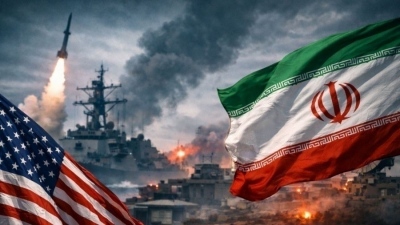
An unprecedented energy and economic shock will hit markets if the war in Iran continues for a prolonged period, according to the organization that advises central banks globally. It warns of the stance central banks must maintain as they are haunted by past mistakes. The BIS called on policymakers not to react hastily to the rise in global energy prices caused by the Iran crisis, describing it as a classic example of a case where a supply shock should be "ignored," provided it proves temporary. The 40% increase in oil prices this month and the nearly 60% jump in wholesale natural gas prices have triggered comparisons to 2022, when the Russian invasion of Ukraine and the post-pandemic global economic restart sent inflation soaring.
Past mistakes haunt the markets
Leading central banks, such as the Federal Reserve and the ECB, had at that time raised interest rates to their highest levels in decades, but faced criticism for reacting late, having initially underestimated the duration of the inflationary shock. This time, markets reacted quickly, readjusting their expectations and betting that central bankers will not want to repeat the same mistake. However, the Bank for International Settlements (BIS) in its latest report calls for restraint. "If it is a supply shock, and especially if it is temporary, these are the classic examples where it should be ignored and there should be no reaction through monetary policy," said the organization's top economic advisor, Hyun Song Shin. "Everything depends on how long the conflict lasts and for how long the rise in oil prices is maintained," he added.
Critical week for central banks
These statements come at the start of a pivotal week for markets, as the Federal Reserve, the ECB, the Bank of England, and the Bank of Japan hold their first meetings since the start of the crisis in the Middle East on February 28. Shin noted that the rapid reassessment of interest rate expectations is perhaps a "sign of the times," given the vivid memories of 2022.
Market nervousness and data confusion
Money markets have already halved expectations for rate cuts by the Fed this year, limiting them to just one move, while now fully pricing in a rate hike by the ECB by July, with an 85% probability of a second hike by the end of the year. "It's a gut reaction," Shin said, highlighting that key inflation indicators have not yet moved to the same degree, creating "a very confusing picture."
Prolonged war, greater risk
A prolonged or widening war could lead to further interest rate hikes, intensifying the damage to the economy, squeezing asset valuations, and further straining already bloated public debts. "This is something we will have to monitor very closely," Shin stated. "The effect of a prolonged increase in energy prices will impact the real economy and the longer it lasts, the greater the impact will be. There will also be an effect on fiscal balances if the economy enters a recession."
Change of strategy in central banks
The BIS report, which is published four times a year, also includes studies on how central banks have changed their communication methods following recent global crises. It shows that more and more are using scenarios to explain risks, moving beyond traditional tools like forecast charts and qualitative assessments. Many have also moved away from so-called "forward guidance" on the path of interest rates, choosing instead to publish their own forecasts, often within the context of alternative scenarios.
Areas of concern beyond energy
The BIS also referred to other sources of volatility this year, such as the heavy selling in stocks related to artificial intelligence and problems in the private lending market. "We need to monitor this," said the deputy head of the monetary and economic department of the BIS, Frank Smets. "But for now, we do not see major disruptions."
www.bankingnews.gr




Σχόλια αναγνωστών